.png)
.png)
Wet vs. Dry Winter Boat Storage: Which Is Right for Your Boat?

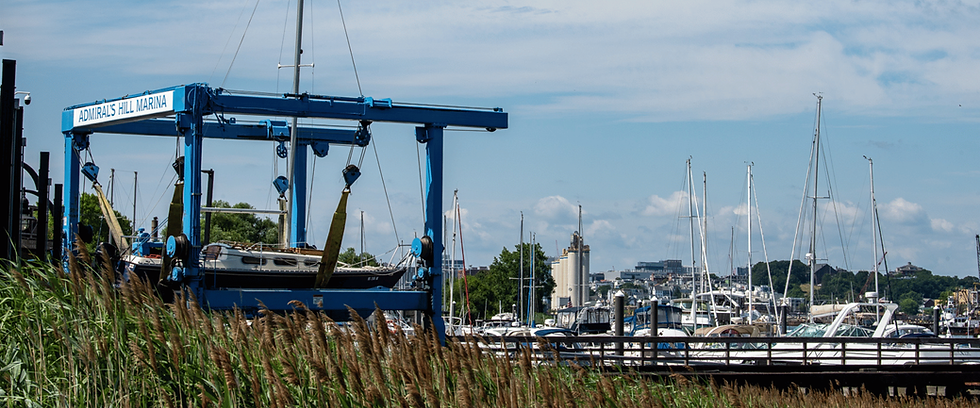
Winter storage is one of those decisions that sounds simple until you actually have to make it. Do you haul the boat and keep it on land, or leave it in the water for the winter?
Both can be good options. The better choice depends on your vessel, the work it may need, how late you want to stay in the water, and how much access you expect during the off-season.
At Marina at Admiral’s Hill, we offer both wet and dry winter storage in a naturally protected corner of Boston Harbor. Our team can help you understand the practical differences and choose the arrangement that makes the most sense for your boat.
What Is Dry Winter Storage?
With dry storage, your boat is hauled out of the water and supported on land for the winter. At Marina at Admiral’s Hill, dry storage includes haul-out, power washing, blocks and stands, monitoring throughout the storage season, and spring launch.
For many boat owners, the biggest advantage is simple: the hull, running gear, and underwater components are no longer exposed to water, ice, and marine growth. Once the boat is hauled, it is also easier to inspect areas that cannot be fully evaluated while the vessel is afloat.
Dry storage can be especially practical if you are planning bottom paint, hull repairs, running-gear work, or other out-of-water maintenance. It creates a natural opportunity to take stock of the boat at the end of the season, address problems before they grow, and begin spring with fewer surprises.
When Dry Storage May Be the Better Fit

Dry storage often makes sense for boaters who are finished using their vessel for the season, want the boat completely out of the water, or expect to schedule work below the waterline.
It can also appeal to owners who simply feel more comfortable knowing their boat is blocked securely on land through the coldest months.
The tradeoff is flexibility. Once the boat is hauled and settled into winter storage, getting back out on the water is no longer a spontaneous decision. That is why it helps to be realistic about your fall and early spring boating plans before choosing a haul-out date.
What Is Wet Winter Storage?
With wet storage, your boat remains in the water during the winter. At Marina at Admiral’s Hill, wet storage includes bubblers and on-site care, with availability and suitability reviewed directly with our marina team.
Wet storage is often attractive to owners who want extended seasonal access or prefer not to haul their vessel. It may also reduce some of the logistics associated with moving and blocking a larger boat on land. For the right vessel, in the right marina, it can be a practical and convenient option.
However, keeping a boat in the water does not mean skipping winter preparation. Engines, freshwater systems, heads, air-conditioning systems, batteries, canvas, and other onboard equipment may still require winterization or cold-weather care.
Lines, fenders, shore power, through-hulls, and bilge systems also need attention. Your insurance requirements and the recommendations of your mechanic or manufacturer should be part of the decision.
When Wet Storage May Be the Better Fit
Wet storage may be a good choice if your vessel is suitable for year-round water storage, you value extended access, and you are comfortable with the winterization and monitoring plan required for your boat.
It is not a one-size-fits-all decision, which is why a conversation with the marina team is worthwhile before reserving space.
Five Questions to Ask Before You Decide
1. Do you expect to use the boat late in the fall or early in the spring?
If you are hoping to stretch the season, wet storage may offer more flexibility. If your boating year is finished, dry storage may be the simpler choice.
2. Does the boat need out-of-water work?
Bottom paint, propeller service, hull repairs, and other below-the-waterline projects point toward dry storage.
3. What does your insurance policy require?
Some policies have specific requirements for winter layup, monitoring, winterization, or in-water storage. Check before making a final decision.
4. How much access do you want during the winter?
Think honestly about whether you expect to visit, work on, or use the boat. Your answer can quickly narrow the choice.
5. What does your vessel need?
Boat size, construction, systems, condition, and manufacturer guidance all matter. The best plan is the one built around the actual boat, not a general rule of thumb.
Why Store at Marina at Admiral’s Hill?
Location matters in winter.
Marina at Admiral’s Hill sits where the Island End River meets the Mystic River, in a naturally sheltered, wake-free cove long known by local boaters as Boston Harbor’s “Hurricane Hole.”
The marina offers bridge-free access to Boston Harbor and year-round staff support, all just minutes from downtown Boston.
Just as important, winter storage here is not a drop-it-off-and-hope-for-the-best arrangement. From haul-out and power washing to blocks, stands, monitoring, bubblers, on-site care, and spring launch, the services surrounding your storage choice are designed to make the off-season more manageable.
Our goal is not to steer every boat owner toward the same option. It is to help you make a sound decision, protect your investment, and head into spring confident that your boat received the right care.
Plan Before the Last-Minute Rush
The best time to make a winter storage plan is before haul-out calendars and storage areas fill. Starting early gives you time to review your options, coordinate winterization or repair work, and choose a schedule that fits the way you actually use your boat.
Not sure which option fits? Contact Marina at Admiral’s Hill or submit a storage request at MyBostonMarina.com. We will help you choose the right winter home for your boat.


Comments